DynaMix Power
Home › Spare Parts › Vibrating Screen Spare Parts › Vibrating Screen Spring
Vibrating Screen Spring / Steel & Rubber Spring
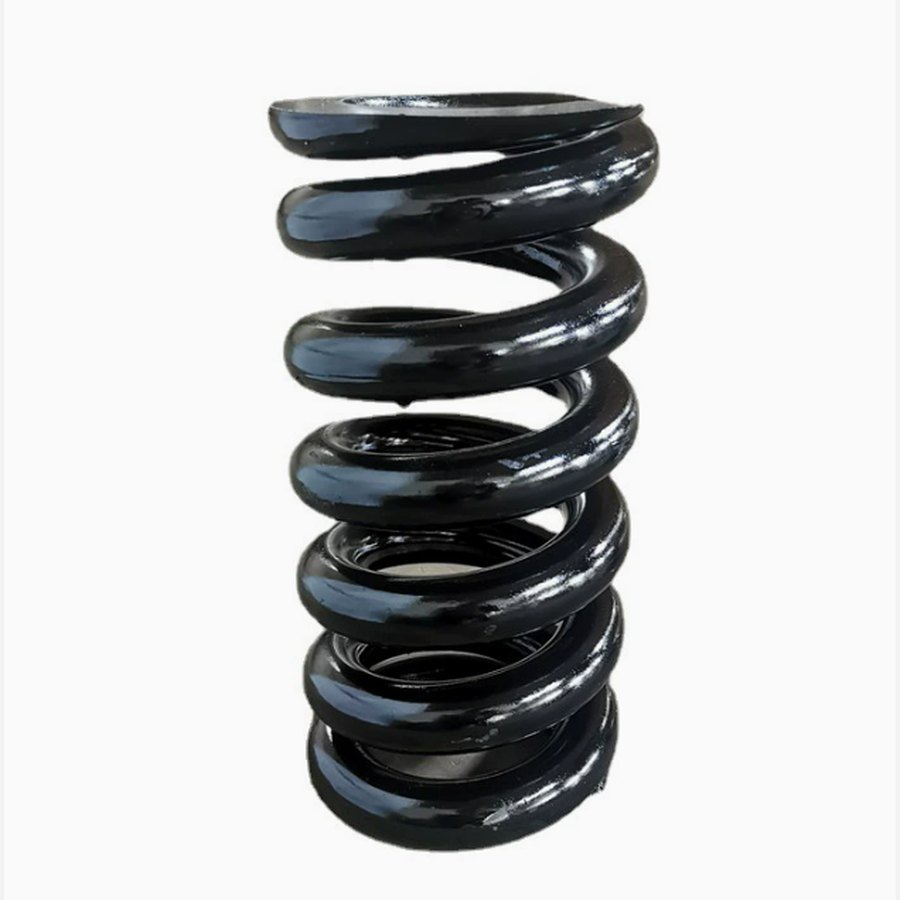
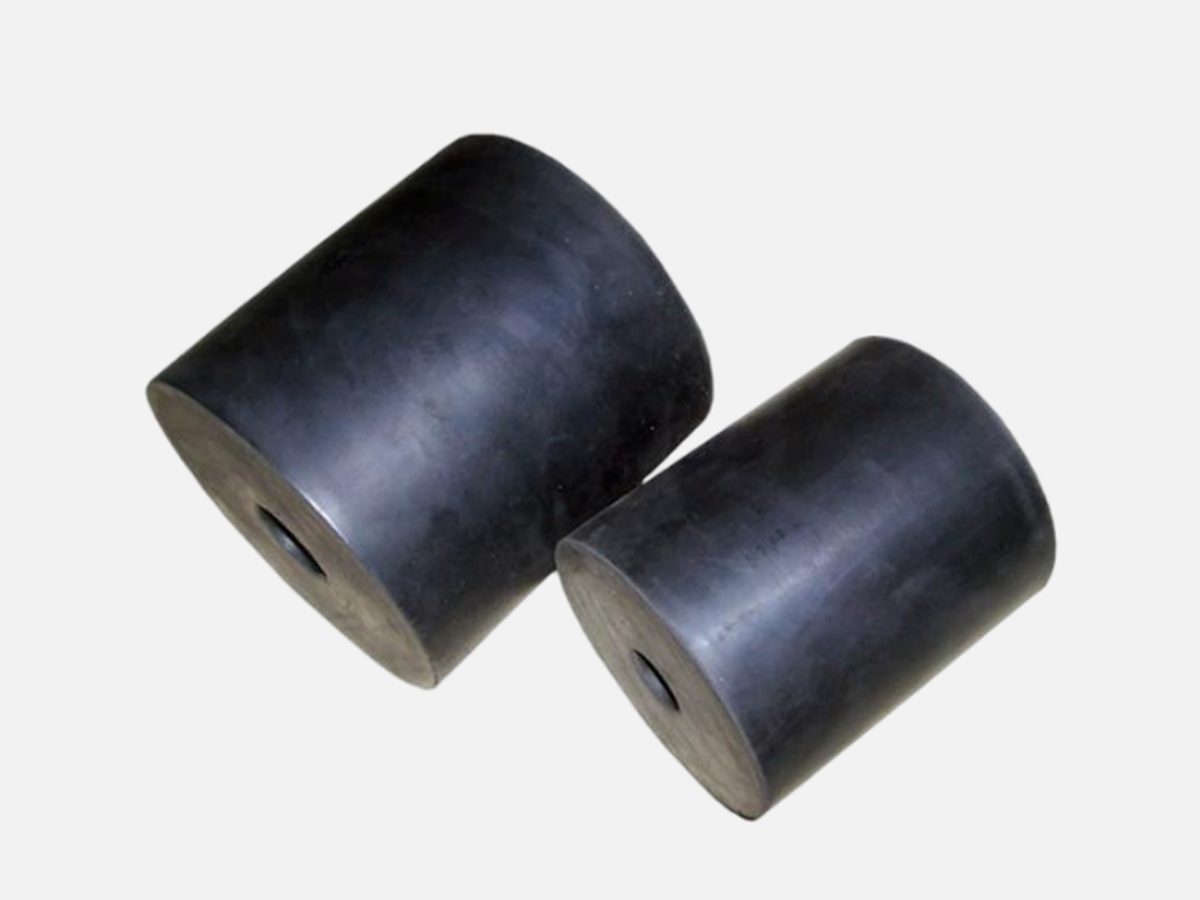
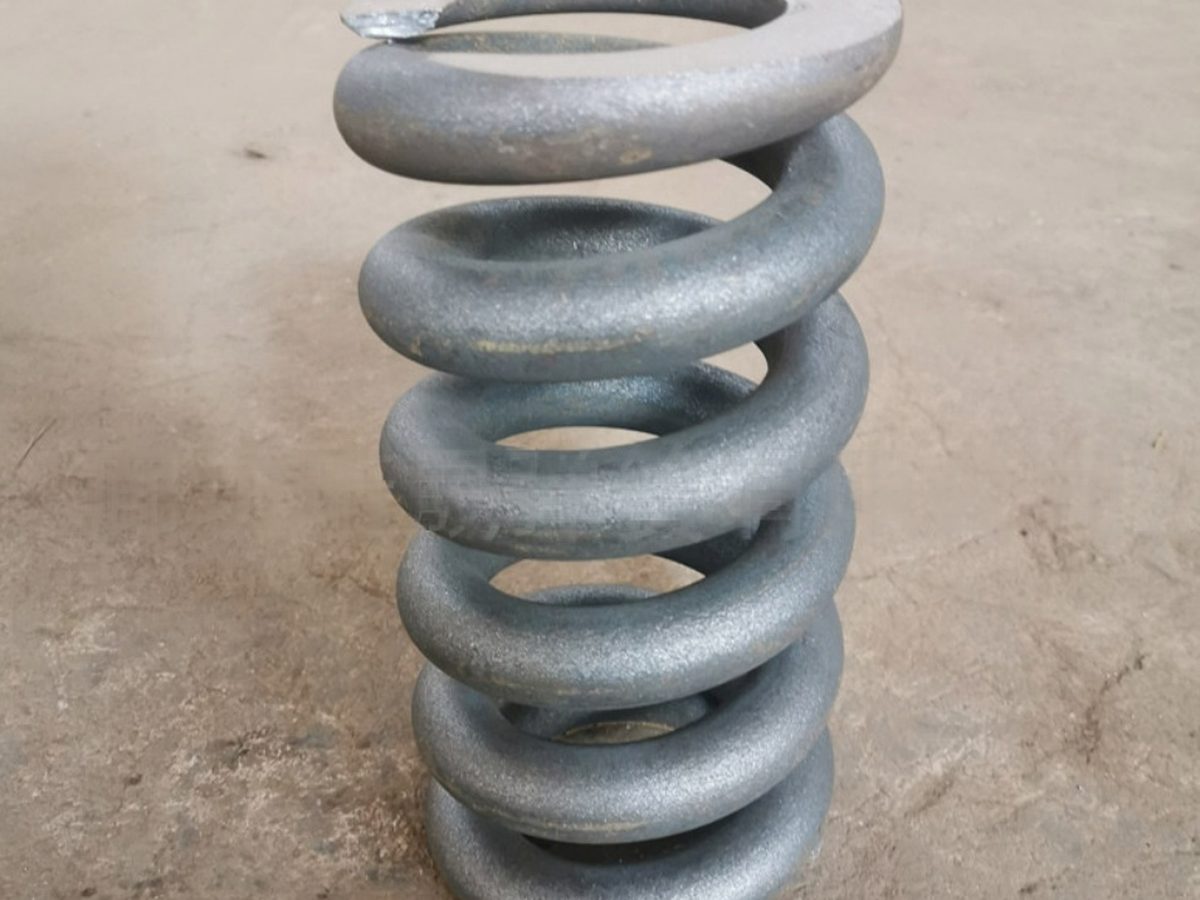
Isolation springs for vibrating screens: rubber cylinders in 40 standard sizes and steel coil springs to the machine mount. The spring sets the screen
Isolation springs for vibrating screens: rubber cylinders in 40 standard sizes and steel coil springs to the machine mount. The spring sets the screen amplitude and keeps that amplitude off the structure, so a spring that has gone soft shows up first as a screen that will not hold its stroke.
Rubber spring parameter table (G x H x D)
| Size (mm) | Outside dia (mm) | Bore (mm) | Free height (mm) | Working deflection FV (cm) | Stiffness KL (kg/cm) | Static load (kg) |
|---|---|---|---|---|---|---|
| 55x50x25 | 55 | 25 | 50 | 0.5 | 50 | 50 |
| 60x60x20 | 60 | 20 | 60 | 0.6 | 60 | 60 |
| 80x60x20 | 80 | 20 | 60 | 0.6 | 60 | 60 |
| 80x80x25 | 80 | 25 | 80 | 0.8 | 100 | 100 |
| 80x80x30 | 80 | 30 | 80 | 0.8 | 100 | 100 |
| 80x110x40 | 80 | 40 | 110 | 1.1 | 120 | 120 |
| 100x90x17 | 100 | 17 | 90 | 0.9 | 130 | 130 |
| 100x100 solid | 100 | solid | 100 | 1.0 | 140 | 140 |
| 100x100x25 | 100 | 25 | 100 | 1.0 | 140 | 140 |
| 100x100x30 | 100 | 30 | 100 | 1.0 | 140 | 140 |
| 100x130x30 | 100 | 30 | 130 | 1.3 | 150 | 180 |
| 120x120x30 | 120 | 30 | 120 | 1.2 | 220 | 260 |
| 120x140x30 | 120 | 30 | 140 | 1.4 | 230 | 270 |
| 125x150x50 | 125 | 50 | 150 | 1.5 | 300 | 420 |
| 140x140x30 | 140 | 30 | 140 | 1.4 | 300 | 420 |
| 140x160x30 | 140 | 30 | 160 | 1.6 | 350 | 490 |
| 140x160x40 | 140 | 40 | 160 | 1.6 | 350 | 490 |
| 140x200x30 | 140 | 30 | 200 | 2.0 | 350 | 490 |
| 160x160x30 | 160 | 30 | 160 | 1.6 | 350 | 560 |
| 160x160x40 | 160 | 40 | 160 | 1.6 | 350 | 560 |
| 160x160x50 | 160 | 50 | 160 | 1.6 | 350 | 560 |
| 160x160x60 | 160 | 60 | 160 | 1.6 | 350 | 560 |
| 160x180x30 | 160 | 30 | 180 | 1.8 | 350 | 560 |
| 180x180x40 | 180 | 40 | 180 | 1.8 | 400 | 720 |
| 180x200x40 | 180 | 40 | 200 | 2.0 | 400 | 800 |
| 180x240x40 | 180 | 40 | 240 | 2.5 | 400 | 1000 |
| 200x150 solid | 200 | solid | 150 | 1.5 | 380 | 570 |
| 200x150x65 | 200 | 65 | 150 | 1.5 | 350 | 520 |
| 200x180x40 | 200 | 40 | 180 | 1.8 | 350 | 520 |
| 200x200x40 | 200 | 40 | 200 | 2.0 | 450 | 900 |
| 200x200x50 | 200 | 50 | 200 | 2.0 | 450 | 900 |
| 200x200x60 | 200 | 60 | 200 | 2.0 | 450 | 900 |
| 220x220x40 | 220 | 40 | 220 | 2.2 | 500 | 1100 |
| 220x220x50 | 220 | 50 | 220 | 2.2 | 500 | 1100 |
| 240x240x40 | 240 | 40 | 240 | 2.4 | 550 | 1300 |
| 240x240x50 | 240 | 50 | 240 | 2.4 | 550 | 1300 |
| 250x250x50 | 250 | 50 | 250 | 2.5 | 580 | 1450 |
| 280x170 solid | 280 | solid | 170 | 1.7 | 700 | 1200 |
| 280x170x40 | 280 | 40 | 170 | 1.7 | 700 | 1200 |
| 280x170x50 | 280 | 50 | 170 | 1.7 | 700 | 1200 |
| 280x170x60 | 280 | 60 | 170 | 1.7 | 700 | 1200 |
| block 300x150x100 | - | - | 100 | - | - | - |
| block 200x125x100 | - | - | 100 | - | - | - |
| block 240x120x80 | - | - | 80 | - | - | - |
Warehouse stock and loading
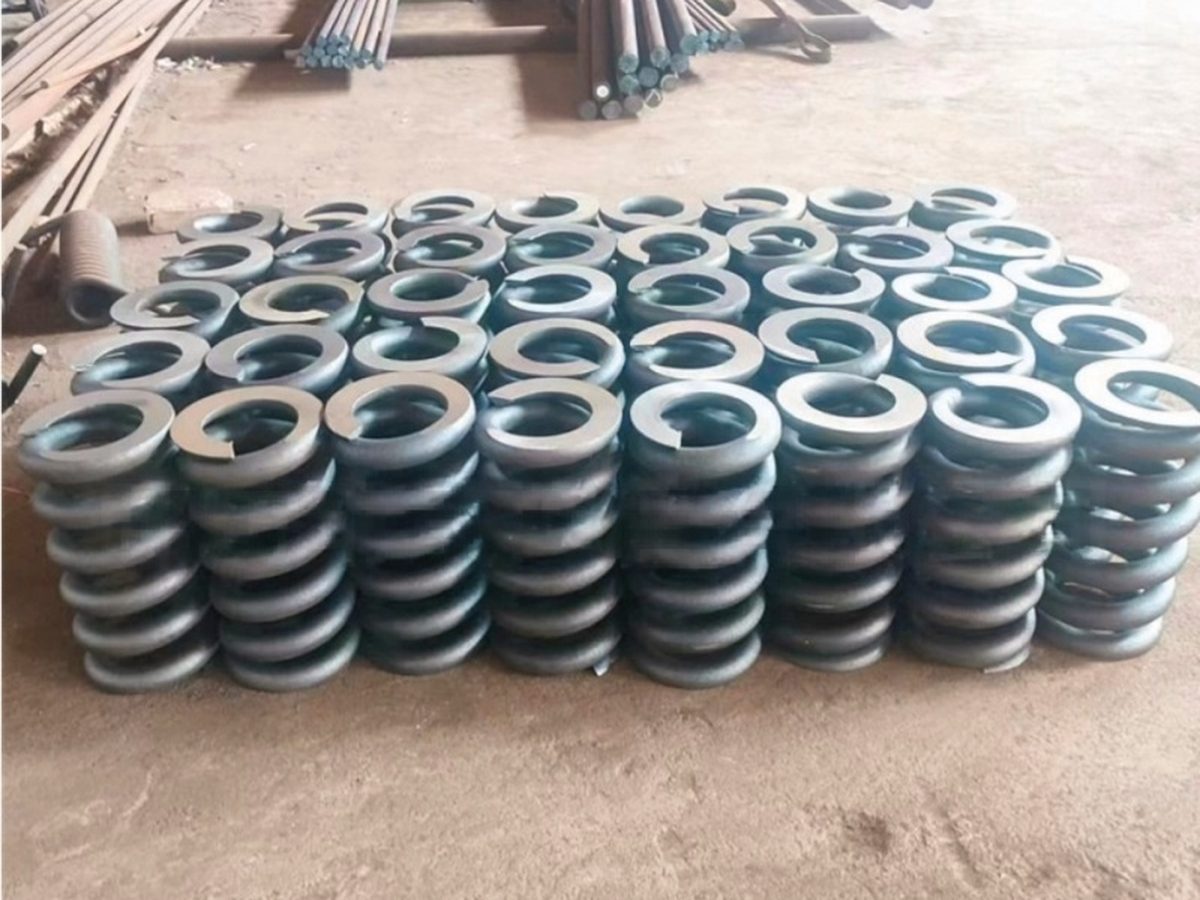
Photographs taken in our own warehouse: finished jaw plates in stock, packed for export, and loaded for shipment. Stock levels change week to week — ask what is on the floor before you plan a shutdown.
What the spring does, and what it costs when it softens
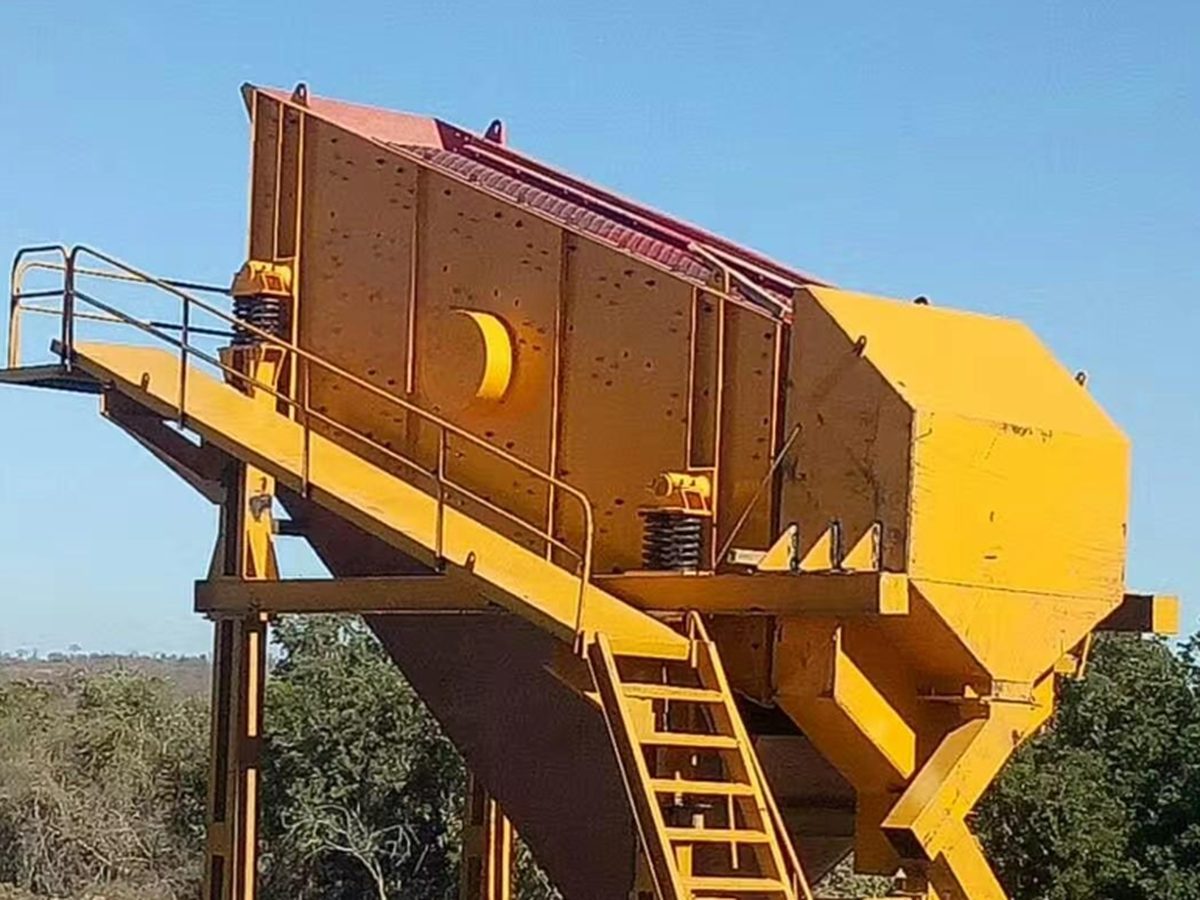
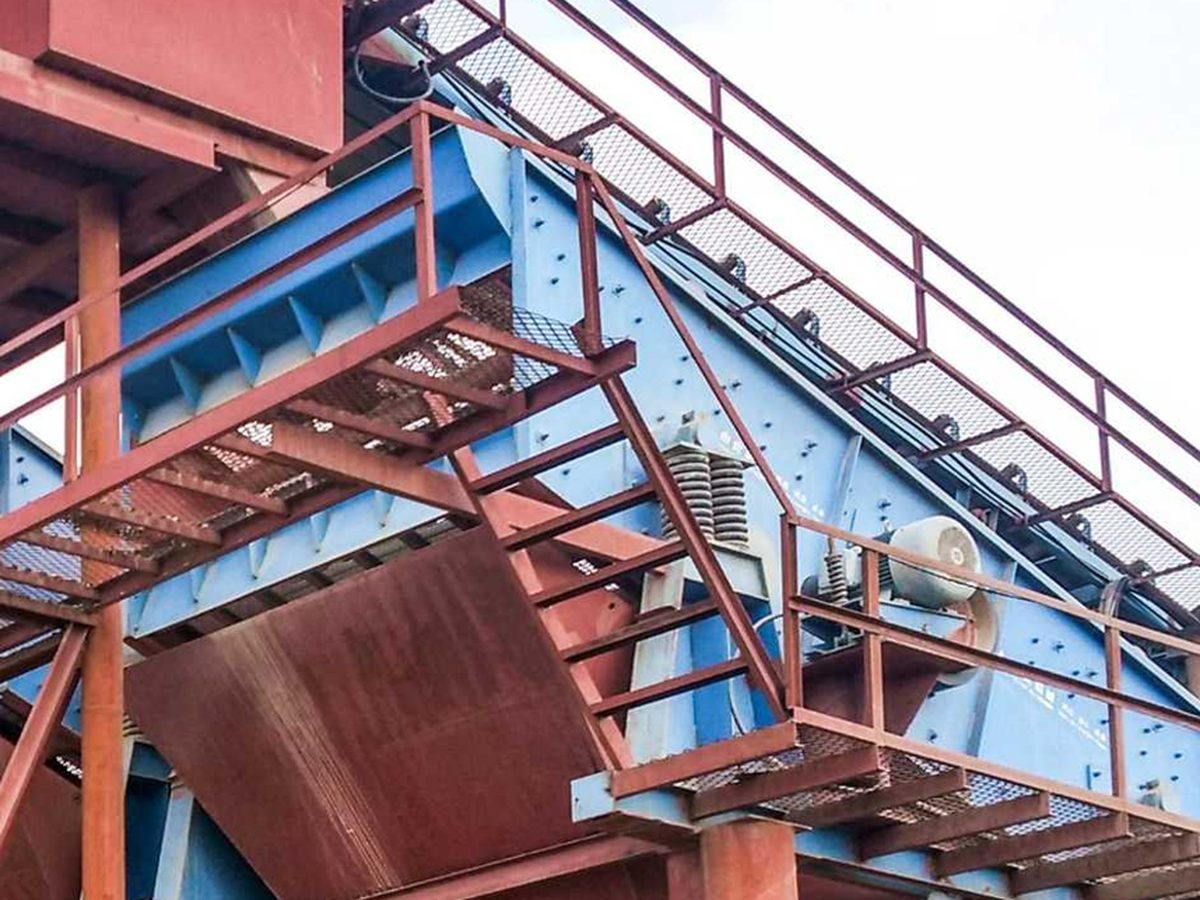
A screen spring does two jobs at once: it lets the deck move at its designed stroke, and it stops that movement reaching the frame. Rubber does the first job by deforming - it has a low elastic modulus and takes a large deflection under load, which is how it absorbs shock and vibration from the deck.
The failure is gradual. A rubber spring that has taken a set still holds the screen up, but it no longer returns the energy, so the stroke falls away and the screen starts to blind. Operators usually blame the mesh first. Measure the stroke before ordering mesh: if it is down, the springs are the cheaper answer.
Rubber or steel
Rubber takes load in several directions at once and needs no lubrication, which is why it is the default on a screen that is moved between sites. It is weaker than steel on heat and on oil: above roughly 60 C in service, or where hydraulic oil reaches the springs, rubber ages quickly.
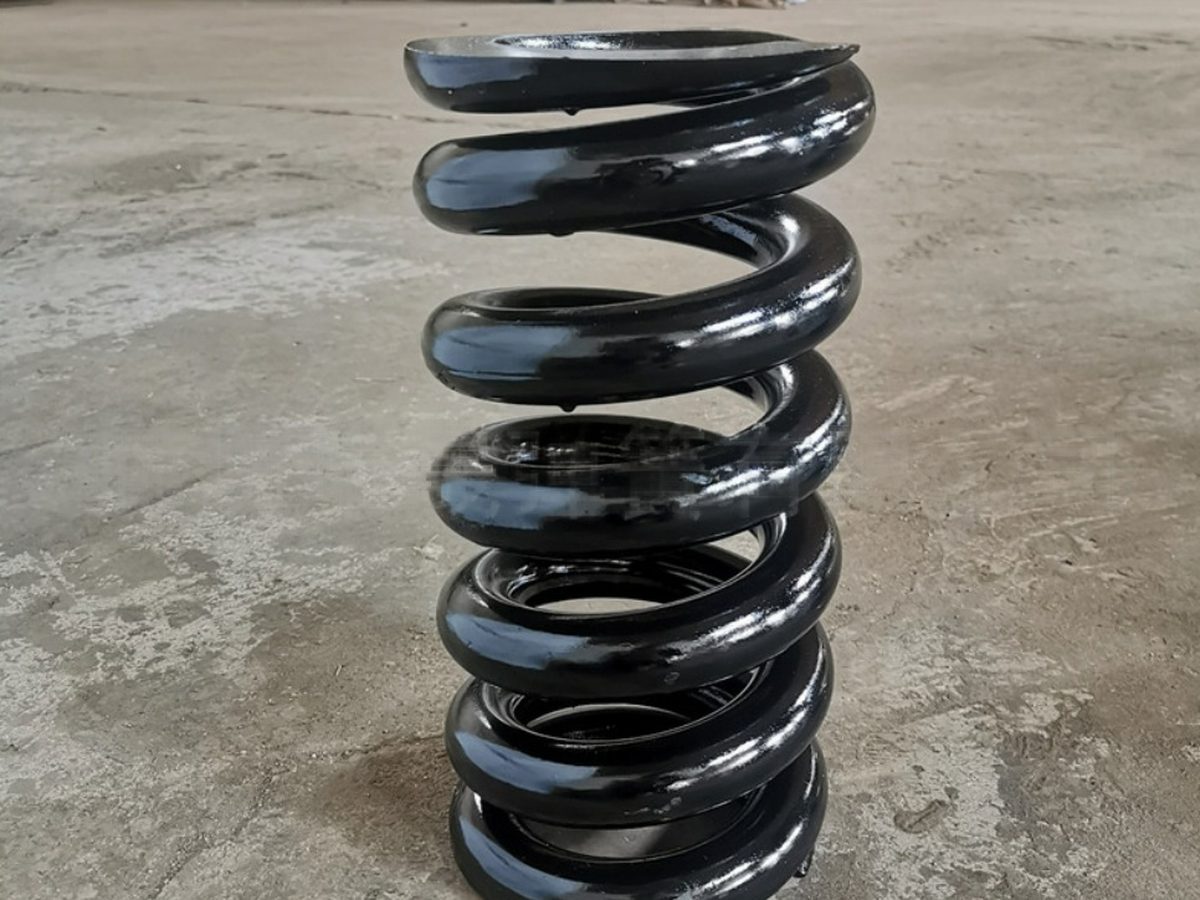
Steel coil springs take heat and oil without complaint and hold their rate for years, but they transmit more high-frequency vibration into the frame and they corrode in a wash plant. On a hot or oily duty, steel is the right answer; on a wet, cold or mobile duty, rubber is.
Reading the parameter table
Each row is one mould: outside diameter, bore, free height, working deflection, stiffness and the static load the spring carries at that deflection. Choose by the load at each mount, not by the size that looks closest - four springs share the deck weight, and a spring picked two steps light will sit at its working deflection before the screen is even loaded.
The solid (no bore) sizes are the stiffest in their diameter and are used where height is limited. The three rectangular blocks at the bottom of the table are damping pads rather than springs: they sit under a chute or a motor base and take shock, not stroke.
- Free height and bore are the mounting dimensions - match them before anything else, because a spring that does not fit the seat cannot be shimmed into place.
- Stiffness is quoted in kg/cm and static load in kg; both are per spring, not per screen.
- Springs are replaced as a set. One new spring next to three tired ones loads the new one first and it fails early.
Ordering
Send the machine model and the spring size printed on the old part, or the outside diameter, bore and free height measured with a rule. Steel coil springs are made to the mount dimensions and wire diameter of the machine, so a drawing or a sample is the safest route.
Oil-resistant rubber is available for screens fed from a wet process or mounted near a gearbox breather; it is a different compound, not a different mould, so the size stays the same.
| Types | Rubber cylinder / steel coil spring |
|---|---|
| Rubber sizes | 55-280 mm outside diameter, 50-250 mm free height |
| Static load | 50-1450 kg per spring |
| Material | Natural rubber; oil-resistant rubber on request |
| Price | USD 10-30 per piece |
Other parts in this group
Independent aftermarket parts supplier. Not affiliated with, endorsed by, or sponsored by Metso, Sandvik or any other original equipment manufacturer. Brand and model names are used only to describe fitment.
Tel / WhatsApp: +86 18616330128 | E-mail: ensaichen@dynamixpower.com