DynaMix Power
Home › Spare Parts › Vibrating Screen Spare Parts › Screen Mesh
Screen Mesh / Wire Mesh & Steel Screen Mesh
Woven wire mesh panels for vibrating screens, in manganese steel or plain steel wire. The aperture sets the product; the wire diameter sets how long the panel
Woven wire mesh panels for vibrating screens, in manganese steel or plain steel wire. The aperture sets the product; the wire diameter sets how long the panel lasts. Panels are cut, edge-bound and hooked to the deck on request.
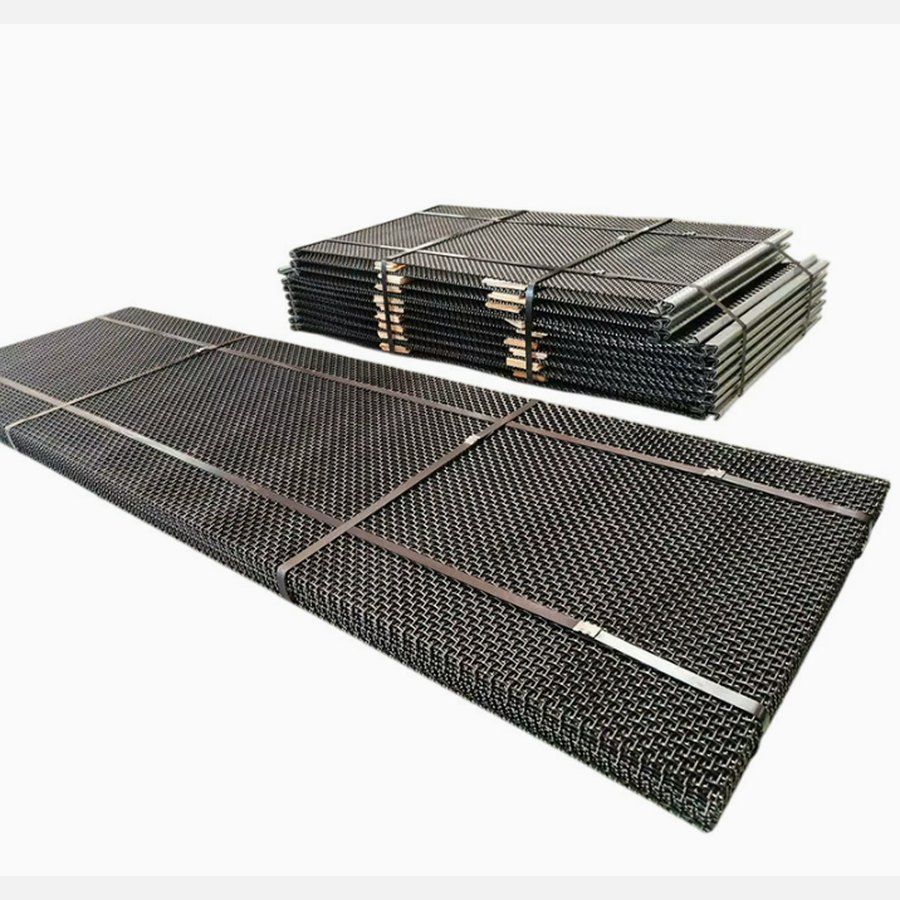
Screen mesh specification
| Item | Specification |
|---|---|
| Product name | Manganese steel woven screen mesh (wire mesh / steel mesh) |
| Material | Manganese steel or carbon steel wire |
| Aperture | 3 / 5 / 10 / 12.5 / 15 / 20 / 25 / 30 / 40 / 60 mm; other apertures made to order |
| Wire diameter | Matched to the aperture and the duty, confirmed on order - a larger aperture is woven in heavier wire |
| Panel size | Cut to the deck; send the deck dimensions or a photograph with a tape across it |
| Edge | Plain cut, edge-bound, hooked both ends, or rolled for shipment |
| Weave | Woven square mesh |
| Applications | Mining, coal, chemical, construction, quarry aggregate |
| Price | USD 15-25 per m2, depending on aperture and wire diameter |
Warehouse stock and loading
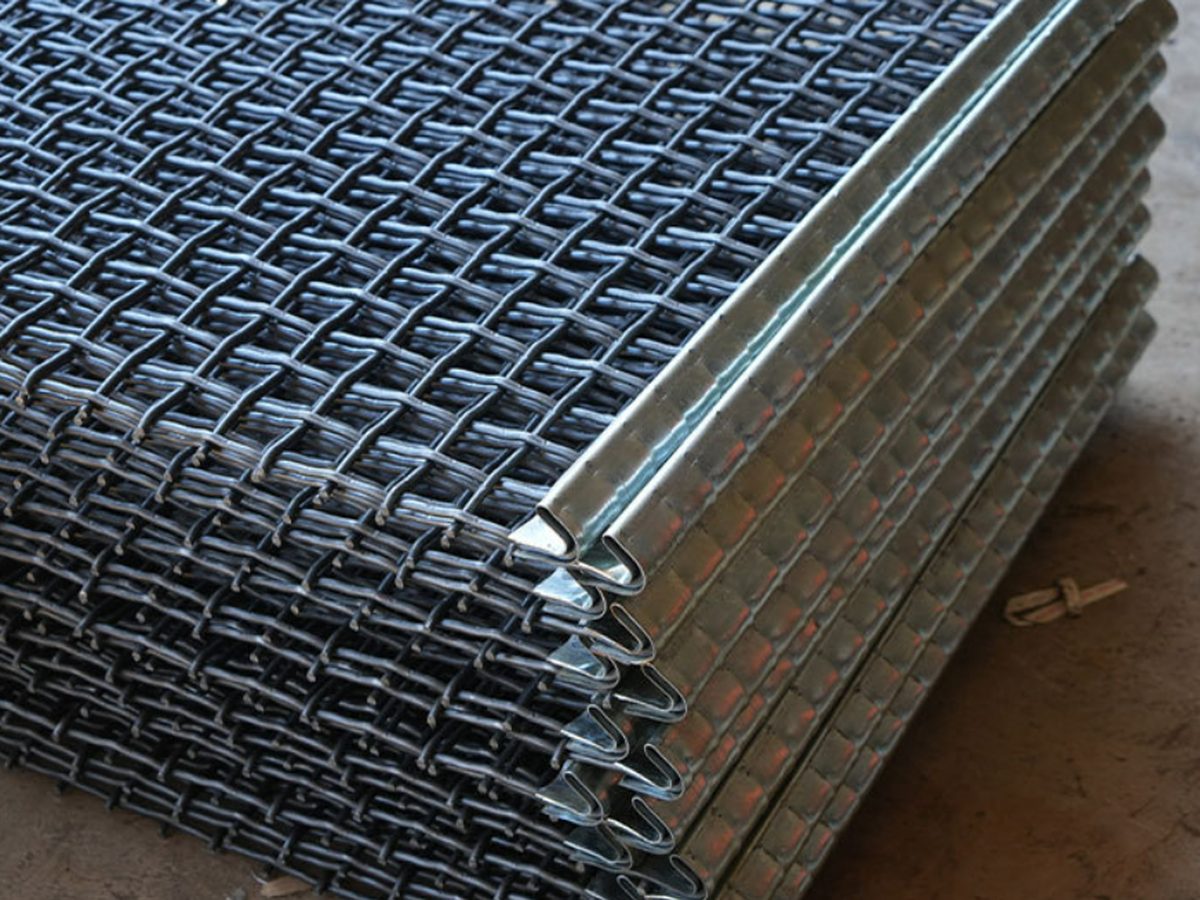
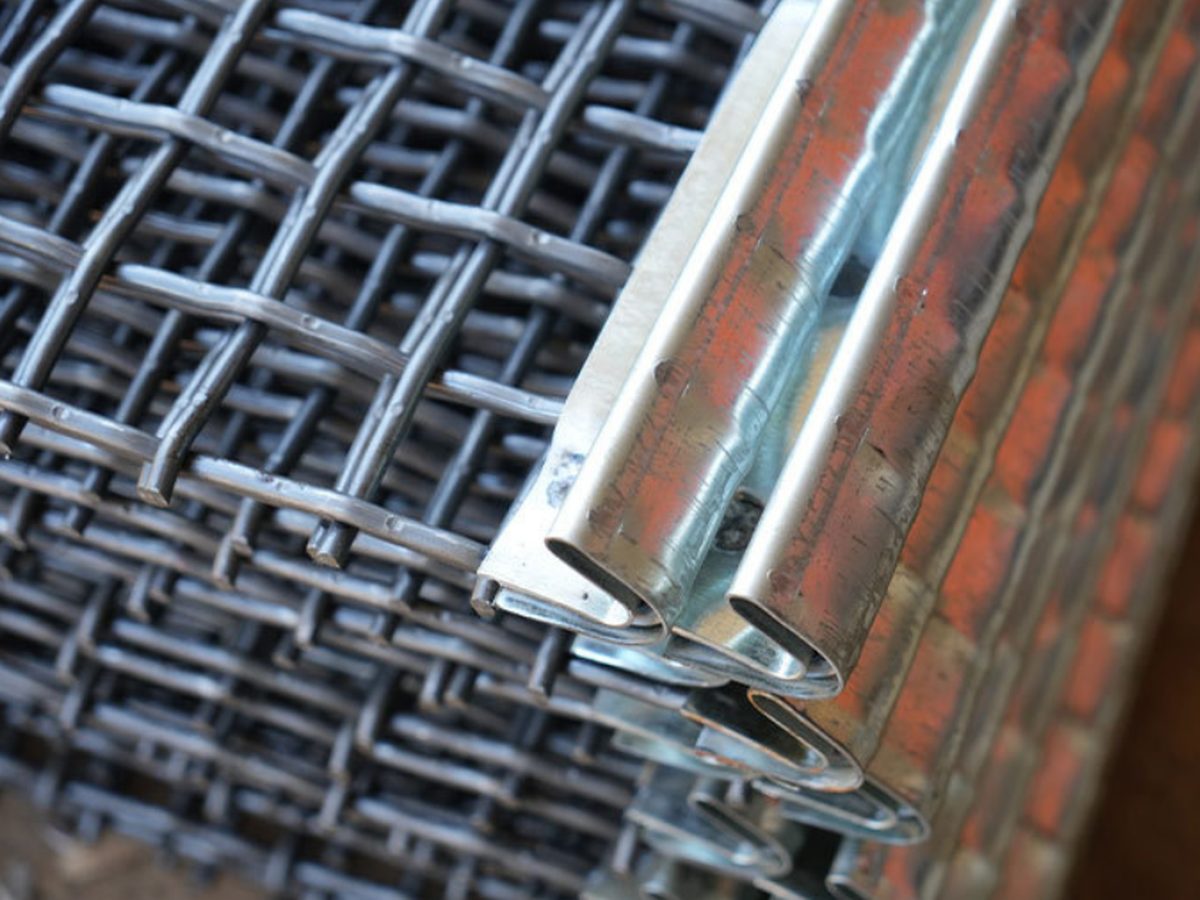
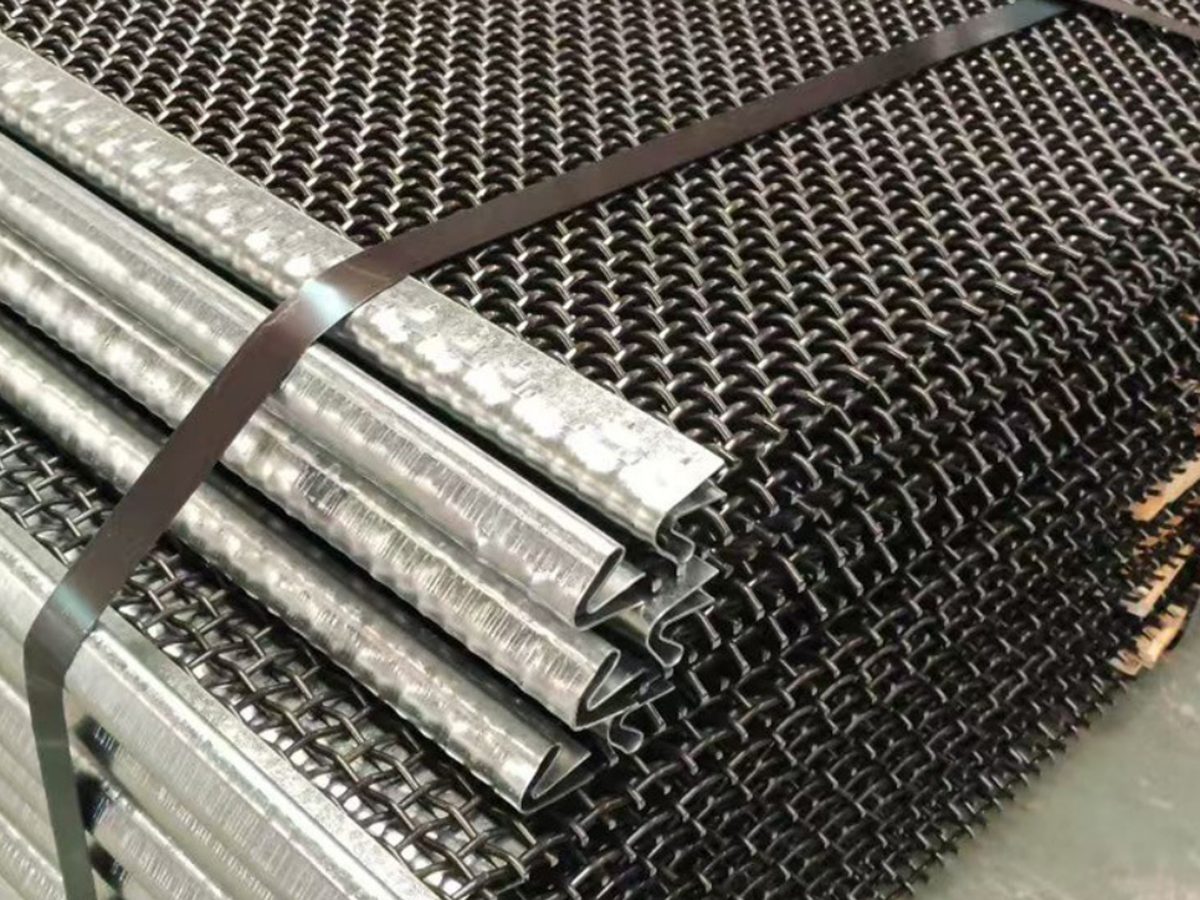
Photographs taken in our own warehouse: finished jaw plates in stock, packed for export, and loaded for shipment. Stock levels change week to week — ask what is on the floor before you plan a shutdown.
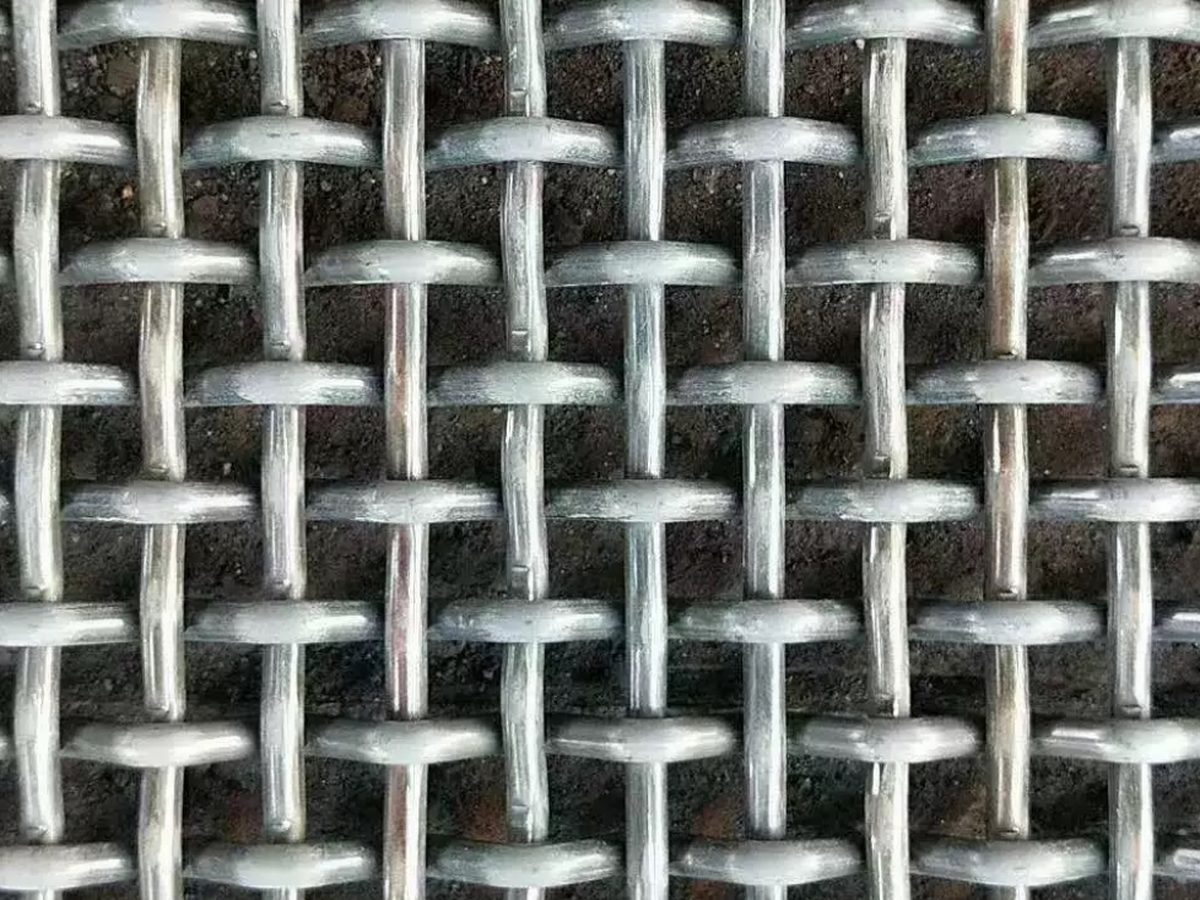
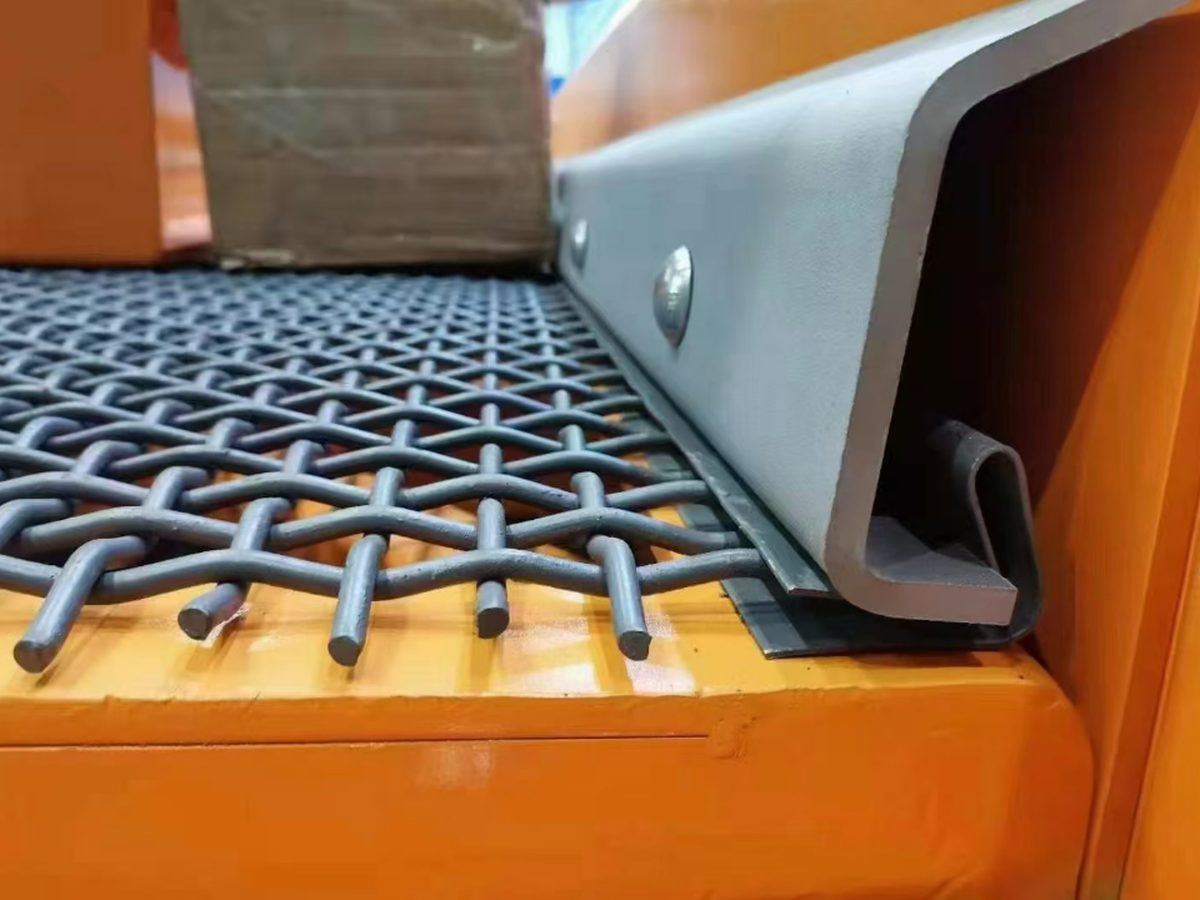
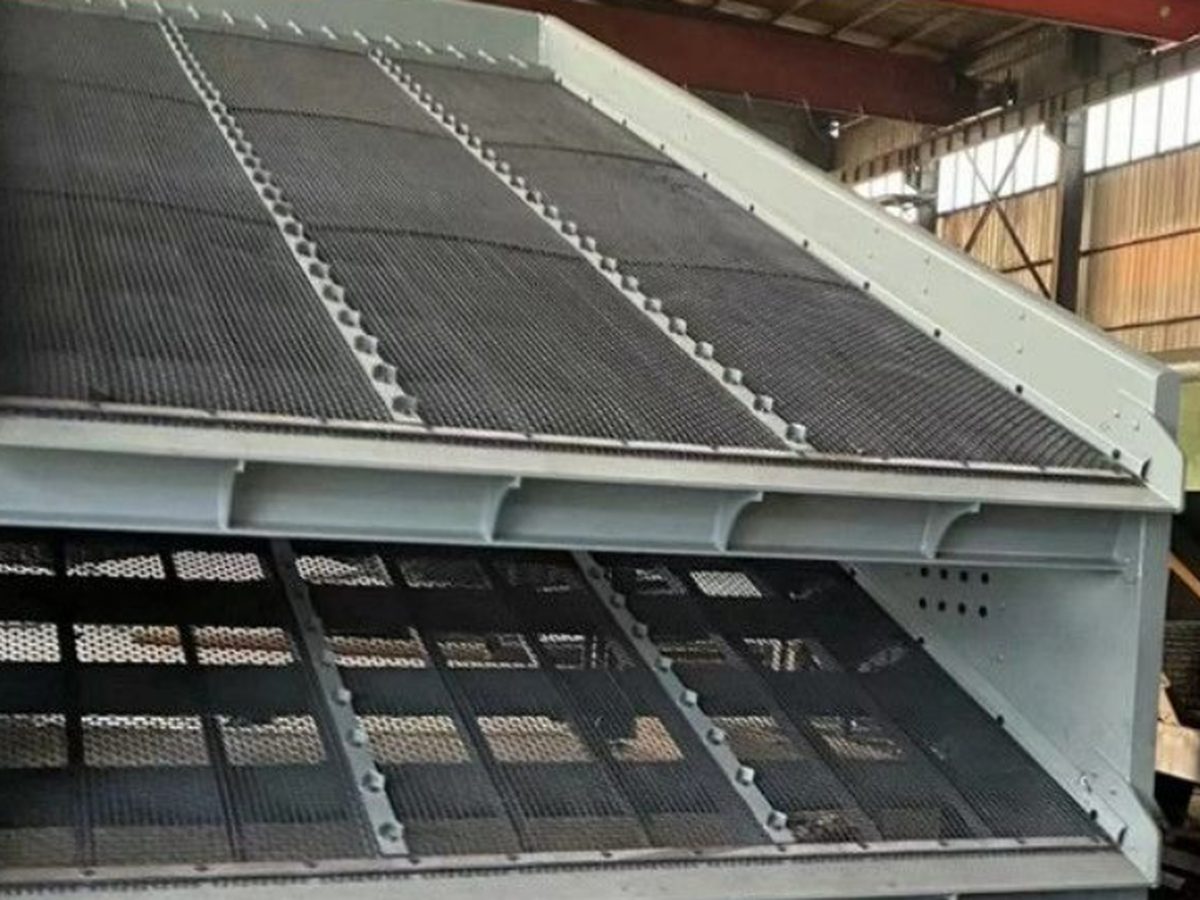
The aperture decides the product, the wire decides the life
A woven screen panel separates by the hole, so the aperture is chosen first and everything else follows from it. The wire diameter then sets two things that pull against each other: open area, which is throughput, and wear life, which is how long that throughput lasts.
Thicker wire on the same aperture means a smaller open area and a heavier panel - less material through per hour, but the panel survives abrasive granite far longer. Thinner wire opens the mesh up and raises capacity, and it also lets a heavy lump stretch the weave and change the aperture over a few weeks. On a primary screen, buy the wire; on a light finishing screen, buy the open area.
- Aperture range we hold tooling for: 3, 5, 10, 12.5, 15, 20, 25, 30, 40 and 60 mm. Other apertures are made to order.
- Wire diameter is matched to the aperture and to the duty - it is confirmed on the order rather than assumed, because the same aperture is woven in more than one wire.
- Square weave is standard; the panel is woven, not punched, so the wire can move slightly under load instead of cracking at a hole.
Specifying a panel: four numbers and one shape
A repeatable order needs the aperture, the wire diameter, the panel size and the edge treatment. Get those four and the panel can be woven and finished without a drawing; leave any of them out and the panel either does not fit the deck or does not tension properly.
The shape matters as much as the numbers. A panel that is hooked on both ends is tensioned by the hook, not by the bolts; a panel that is bolted down is usually edge-bound with a folded strip so the wire does not pull through at the fixing points. Send a photograph of the deck with a tape across it and we will match the fixing.
Manganese steel or plain steel wire
Manganese steel wire work-hardens under impact: the surface gets harder as stone hits it, which is why it holds up on a scalping deck where the feed is lumpy and fast. Plain carbon steel wire is the cheaper choice where the duty is light and the panel is changed on a schedule anyway.
The choice shows up in the failure mode. Manganese panels wear thin and then tear at a hook; plain steel panels fret at the crossovers and drop wires before the panel is worn out. If a screen is losing wires rather than wearing through, the wire grade and the tension are the first things to check, not the aperture.
Finishing: cut, bound, rolled, hooked
Panels are cut to the deck size, edge-bound with a folded strip, rolled for shipment, or supplied with hooks fitted for a tensioned deck. Deeper fabrication - joining two panels into one, or rolling a panel for a curved deck - is done to drawing.
Rolled panels travel better than flat ones and are less likely to be bent in transit; they are straightened on the deck when they are tensioned. If a panel arrives kinked, it will not sit flat however hard it is tensioned, and the kink becomes the first tear.
| Material | Manganese steel / carbon steel wire |
|---|---|
| Aperture | 3 / 5 / 10 / 12.5 / 15 / 20 / 25 / 30 / 40 / 60 mm, others to order |
| Panel form | Cut to size, edge-bound, rolled or hooked |
| Applications | Mining, coal, chemical, construction |
| Price | USD 15-25 per m2 |
Other parts in this group
Independent aftermarket parts supplier. Not affiliated with, endorsed by, or sponsored by Metso, Sandvik or any other original equipment manufacturer. Brand and model names are used only to describe fitment.
Tel / WhatsApp: +86 18616330128 | E-mail: ensaichen@dynamixpower.com