DynaMix Power
Home › Spare Parts › Cone Crusher Spare Parts › Mantle & Bowl Liner
Mantle & Bowl Liner / Mantle Liner
Mantle & Bowl Liner / Mantle Liner for cone crushers. Mn13 / Mn18 / Mn22. Supplied for mining, quarrying, cement, quoted against your crusher model or drawing.
The two liners that form the crushing chamber: the mantle on the moving cone, the bowl liner on the fixed bowl. They are the surfaces the rock actually touches, so between them they set both the reduction ratio and the cost per ton.
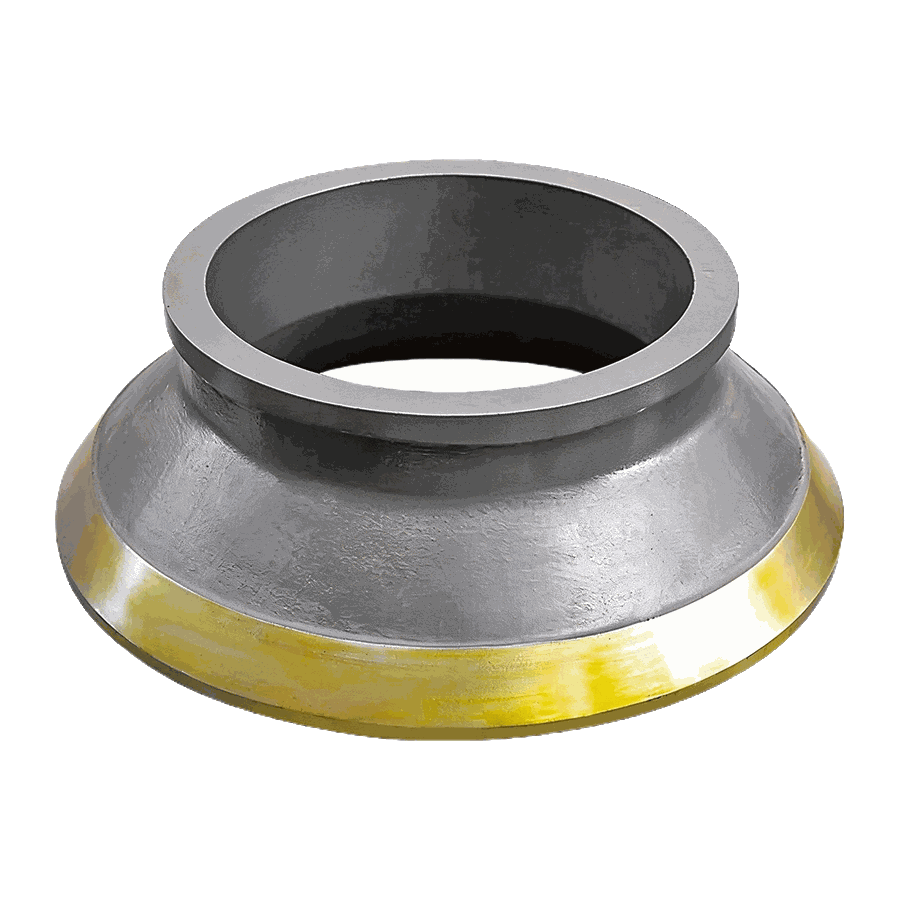
Product details
| Name | Description | Material | Application | Delivery time | Price |
|---|---|---|---|---|---|
| Mantle & Bowl Liner | Cone crusher mantle and bowl liner, cast to the cavity drawing | Mn13 / Mn18 / Mn22 | Mining, quarrying, cement | 15–20 working days | USD 1.8–2.5 / kg |
Price is indicative, per kilogram, and moves with the manganese grade and the weight of the casting. It is fixed on the quotation. Delivery time is production time and does not include sea freight.
Fits: the model, not the size
A cone liner is quoted against the machine model and, where one exists, the cavity drawing: the wall thickness at the wear band, the segment count and the clamp pattern all have to match what the bowl will accept. That covers our own single- and multi-cylinder series as well as the imported machines most often re-lined in the field. Where only a worn liner is available, the profile is measured and drawn before the pattern is made. HP series, GP series, Symons 4¼ / 5½ ft, Sandvik CH / CS, Terex Cedarapids, Kleemann MCO, McCloskey C.
Warehouse stock and loading
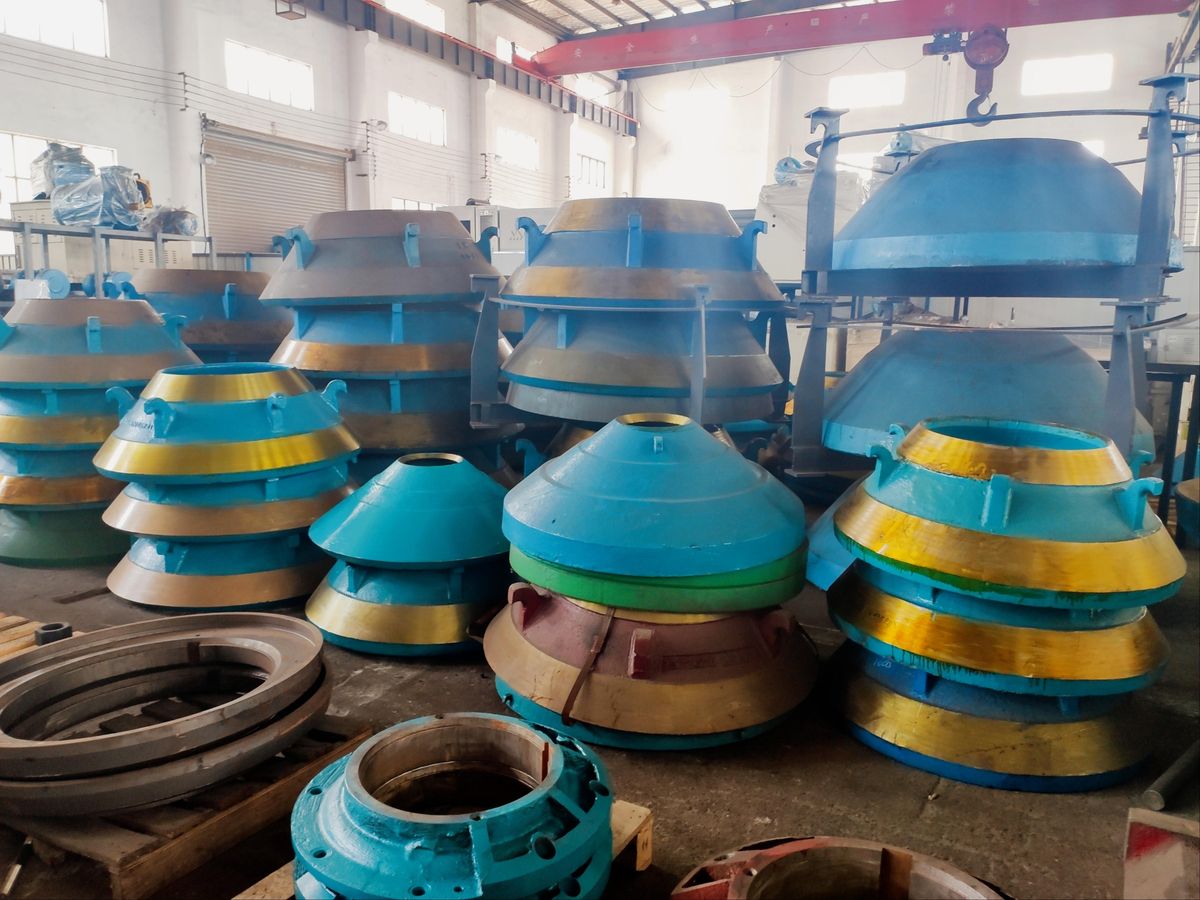
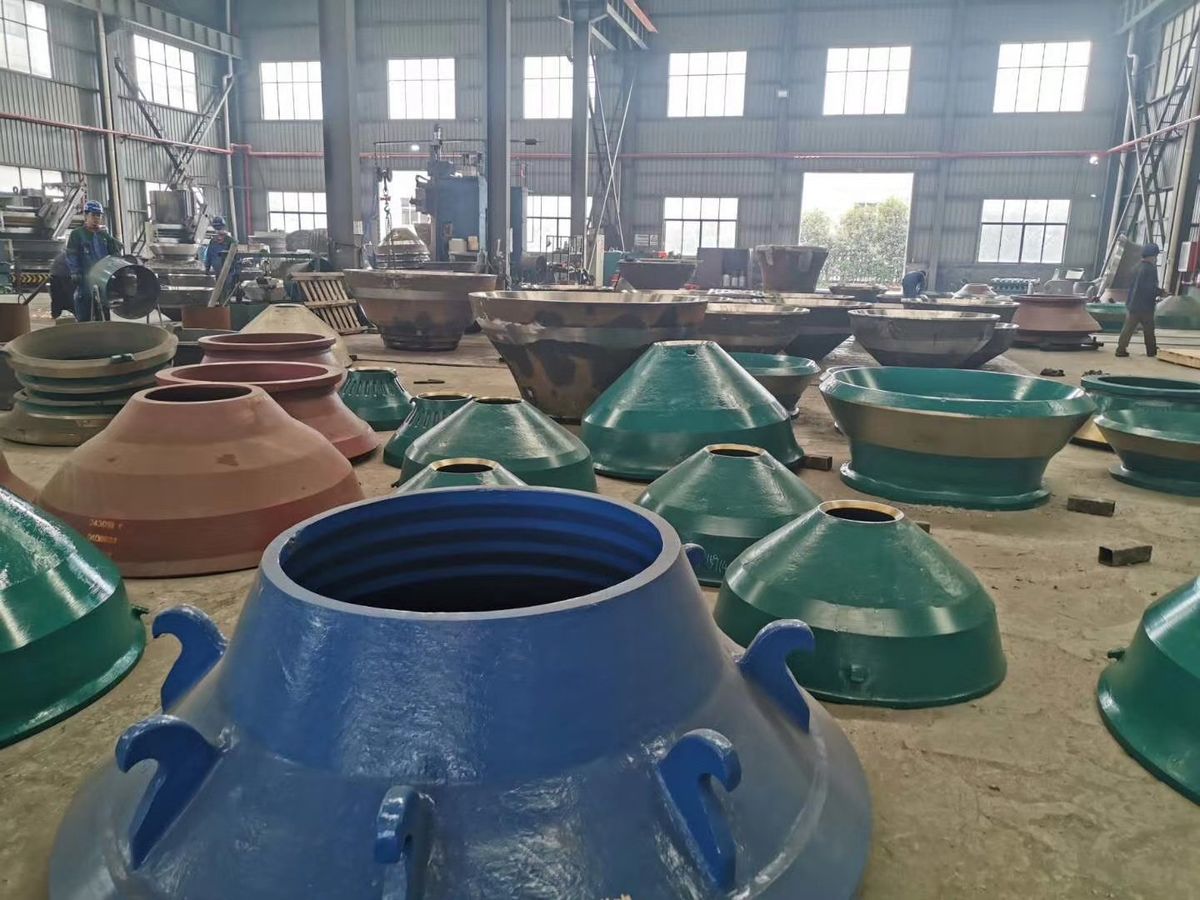
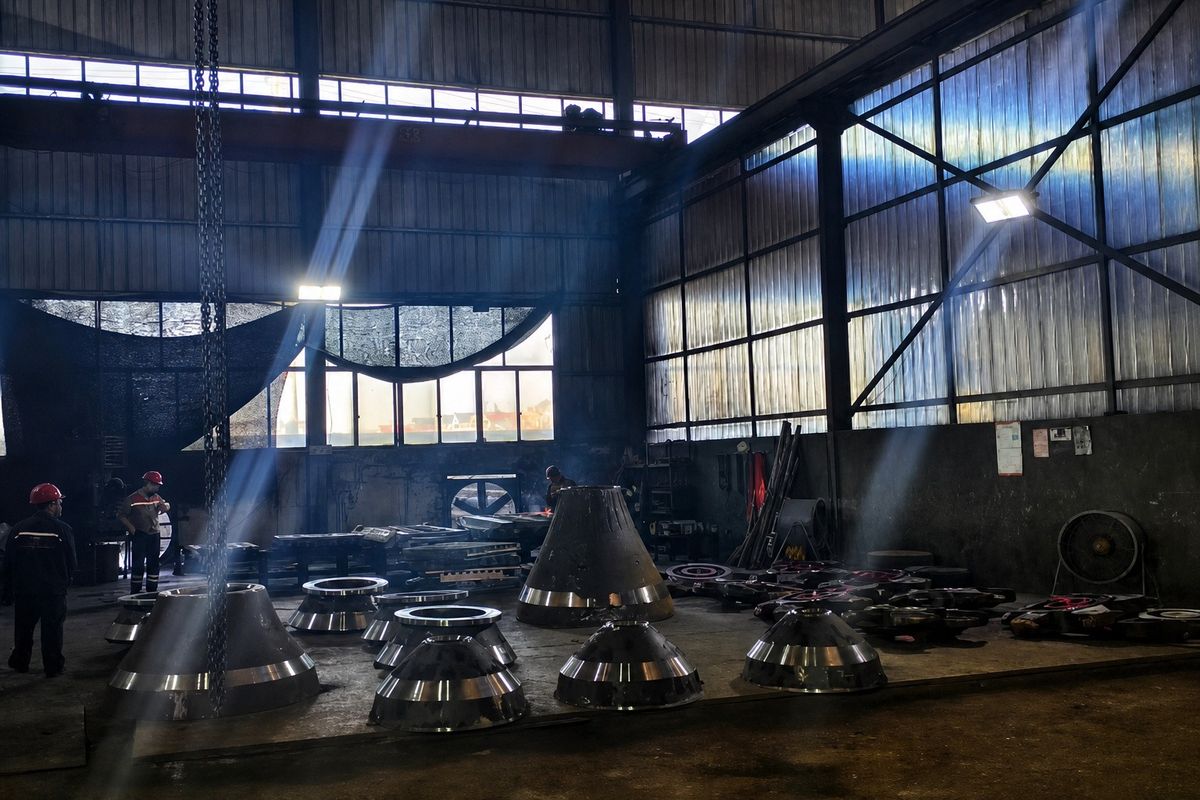
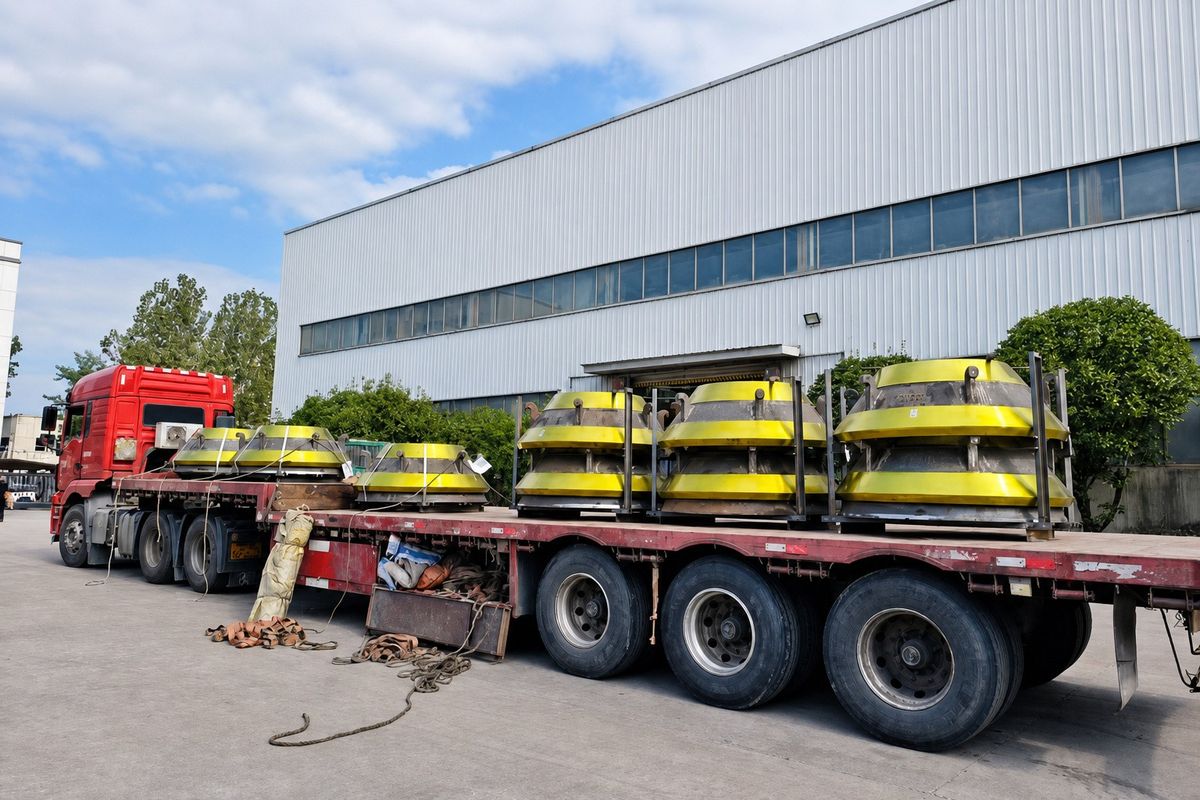
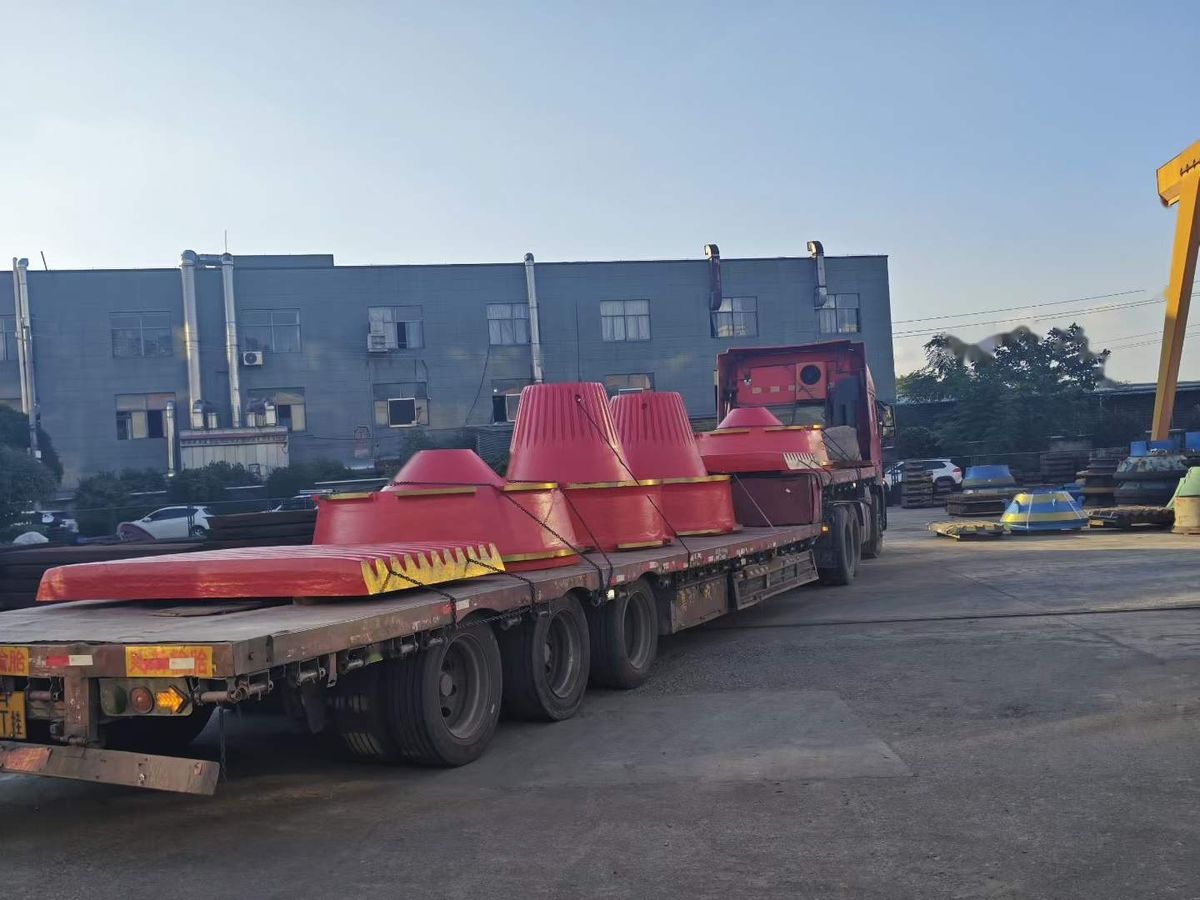
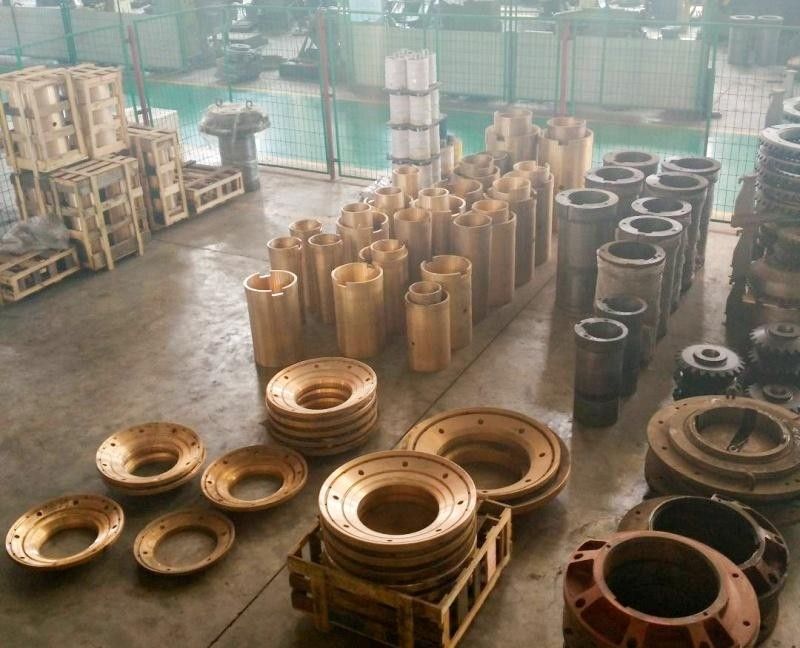
Photographs taken in our own warehouse: finished jaw plates in stock, packed for export, and loaded for shipment. Stock levels change week to week — ask what is on the floor before you plan a shutdown.
A pair works, or it does not
A cone closes its chamber around a full circle rather than between two jaws, so the load is spread and the wear is more even than in a jaw crusher. That evenness is also why a mismatch is expensive: if the mantle and the bowl liner were not poured to the same cavity, the chamber stops closing evenly, the setting drifts, and the product curve moves before either liner is worn out.
We quote the pair against one drawing for that reason. Replacing one half against a worn half is possible, but the new liner wears itself into the old profile and the next change arrives sooner than the tonnage suggests.
- Mantle — the moving surface. Wears from the top down. Cracks starting at the head-nut seat are usually a loose head nut, not a bad casting.
- Bowl liner — the fixed surface. Wears in a band where the feed lands; a step in that band changes the closed-side setting even when the adjustment ring has not moved.
- Both — check the backing compound and the seating face before fitting. A liner that rocks on its seat will crack whatever the grade.
What changes the service life
Three things, in this order: whether the cavity profile matches the machine, whether the grade matches the rock, and how the chamber is fed. A chamber fed to one side wears its liners oval and loses capacity long before the liners are thin — no casting fixes that.
- Feed graded rather than single-sized. A chamber fed only with fines never builds the bed of rock that protects the liner from direct impact.
- Closed-side setting inside the machine range. Running tighter than the cavity was designed for loads the head and the eccentric, not the liner.
- Backing compound fully cured before the machine is run. A liner that moved on its seat during the first shift never sits true again.
Before it ships
Each casting is checked at the wear band for wall thickness and at the seat for flatness, because those two decide whether the liner beds correctly. Where a customer sends a worn liner as a pattern, the profile is measured and drawn before the pattern is made — that is the only reliable way to reproduce a cavity whose drawing number was lost.
How to order
Three inputs set the quote: the machine model, the cavity profile you are running now, and the tonnage the last liner delivered. Send the model plus either the drawing number or a photograph of the worn liner with a tape across the wear band, and the quote comes back with weight, grade and lead time. If the bowl has been re-machined, send the bore measurement as well.
Other parts in this group
Independent aftermarket parts supplier. Not affiliated with, endorsed by, or sponsored by Metso, Sandvik or any other original equipment manufacturer. Brand and model names are used only to describe fitment.
Tel / WhatsApp: +86 18616330128 | E-mail: ensaichen@dynamixpower.com