DynaMix Power
Home › Spare Parts › Impact Crusher Spare Parts › Blow Bar
Blow Bar / Impact Crusher Blow Bar
Blow Bar / Impact Crusher Blow Bar for impact crushers. Mn13 / Mn18, white iron, martensitic steel. Supplied for quarrying
The bar that does the hitting. Four to a rotor on most machines, and the only part that meets the rock at full rotor speed — so the bar sets the reduction, the power draw and the shape of the product.
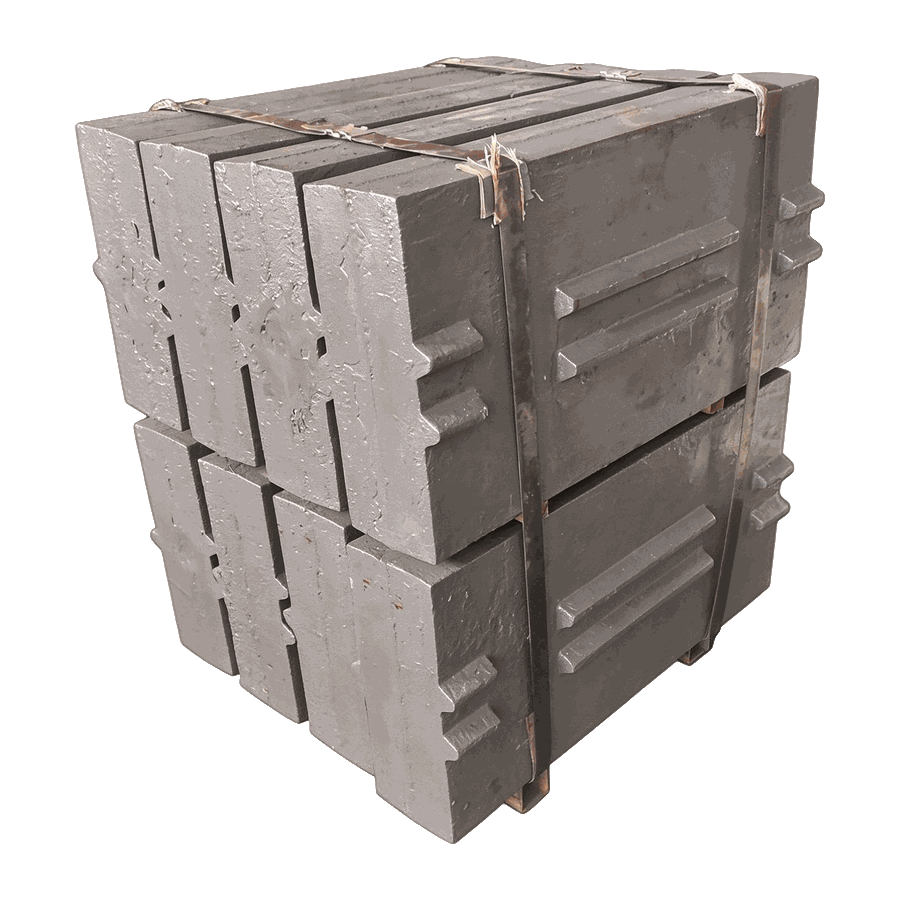
Product details
| Name | Description | Material | Application | Delivery time | Price |
|---|---|---|---|---|---|
| Blow Bar | Impact crusher blow bar, matched-weight set to the rotor drawing | Mn13 / Mn18 white iron / martensitic steel | Quarrying | 15–20 working days | USD 1.7–2.3 / kg |
Price is indicative, per kilogram, and moves with the manganese grade and the weight of the casting. It is fixed on the quotation. Delivery time is production time and does not include sea freight.
Fits: the model, not the size
A blow bar or impact plate is quoted against the machine model and the rotor drawing: the bar length, the fixing pattern and the weight of each bar have to match, because a rotor that is out of balance destroys bearings long before the bars are worn. That covers the machines most often re-lined in the field, and where only a worn bar is available the profile is measured and drawn before the pattern is made. Nordberg NP, Hazemag APSE / APK, Sandvik CI5xx, Kleemann MR, Rubble Master RM, Terex Finlay I, Powerscreen XH, McCloskey I.
Warehouse stock and loading
Photographs taken in our own warehouse: finished jaw plates in stock, packed for export, and loaded for shipment. Stock levels change week to week — ask what is on the floor before you plan a shutdown.


Rotating the bars is the cheapest maintenance there is
Most blow bars have two or four usable faces. The leading face wears into a rounded tip, and once the tip is round the bar stops throwing and starts rubbing: throughput falls while the power draw climbs. Turning the bar exposes a fresh edge and buys back a large share of its life for the cost of a shutdown.
The interval comes from the machine manual, but the signal is the product: when the gradation starts running coarse with the apron gap unchanged, the tips are round and the bars are due to be turned or replaced.
- Wear concentrated at the lower half of the leading face: turn the bar, the rest of the face is still good.
- A step worn into the face, or the fixing slot opened up: replace, and check the wedge at the same time.
- A bar broken across the middle: look for tramp metal or a rotor that is out of balance — a bar that was cast to the wrong weight will do the same thing.
High chrome, martensitic, or ceramic insert
High-chrome white iron is the hardest of the three and the longest-lived in clean abrasive rock such as limestone and gravel. It is also brittle: a piece of rebar or an excavator tooth will chip it, sometimes on the first shift, and chips turn into cracks.
Martensitic steel gives up some wear resistance for toughness. It survives demolition feed, it can be built up by welding, and it fails by wearing rather than by breaking — which is what you want when the feed is unpredictable.
Ceramic-insert bars place ceramic cylinders in a chrome matrix at the point where the bar actually wears. In abrasive feed the life gain is real; in feed that breaks chrome, the inserts come out with the matrix.
What is checked before a set ships
A set is matched by weight, not by part number: bars that differ by more than a few hundred grams put the rotor out of balance and the bearings pay for it. Each bar is weighed and the set packed together, the fixing slot and wedge face are checked against the drawing, and ultrasonic or magnetic inspection is carried out where the order asks for it.
How to order
Four inputs set the quote: the machine model, the bar or plate weight, the fixing pattern and the material grade. Send the model plus either the drawing number or a photograph of the worn part against a tape measure, and the quote comes back with weight, grade and lead time. If you are replacing one bar rather than a set, send the weights of the bars still on the rotor — a set is matched by weight, not by name.
Other parts in this group
Independent aftermarket parts supplier. Not affiliated with, endorsed by, or sponsored by Metso, Sandvik or any other original equipment manufacturer. Brand and model names are used only to describe fitment.
Tel / WhatsApp: +86 18616330128 | E-mail: ensaichen@dynamixpower.com