DynaMix Power
Home › Spare Parts › Impact Crusher Spare Parts › Impact Plate
Impact Plate / Impact Apron / Curtain
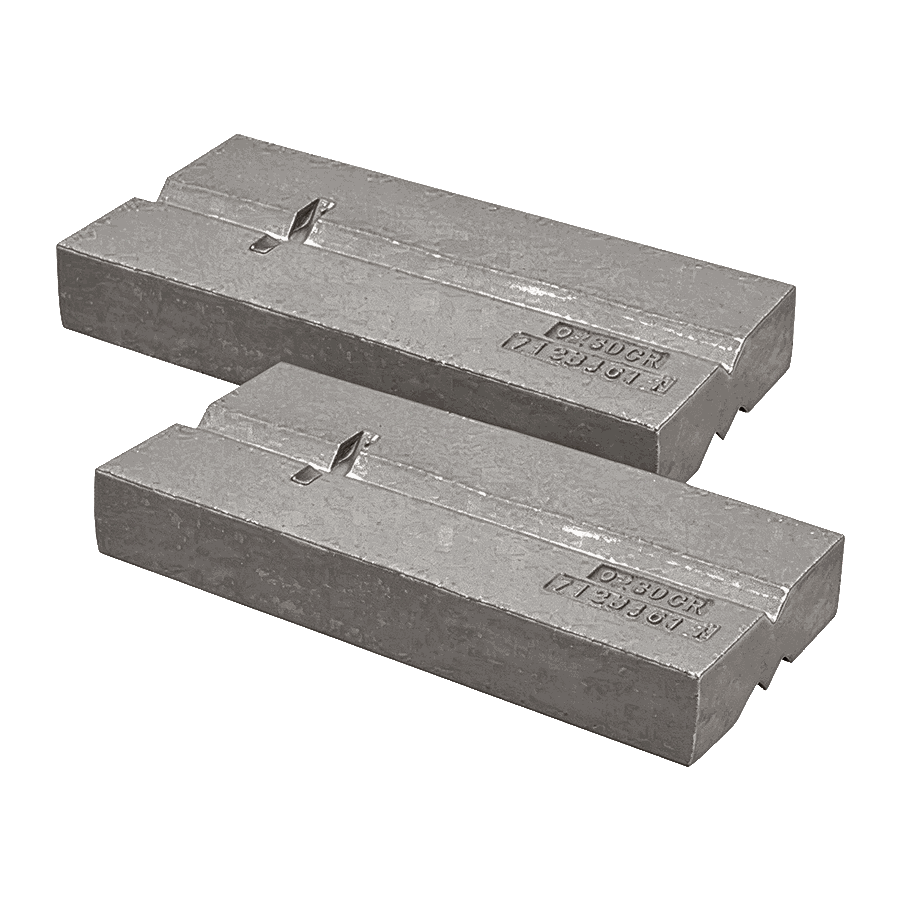
Impact Plate / Impact Apron / Curtain for impact crushers. Mn13 / Mn18. Supplied for quarrying, quoted against your crusher model or drawing.
The plate the rock hits on its way out, hung on the apron behind the rotor. Its angle and its gap set the second and third reduction — and its wear moves the product curve before anyone notices the gap has changed.
Product details
| Name | Description | Material | Application | Delivery time | Price |
|---|---|---|---|---|---|
| Impact Plate | Impact crusher impact plate (apron liner), cast to the apron drawing | Mn13 / Mn18 | Quarrying | 15–20 working days | USD 1.7–2.3 / kg |
Price is indicative, per kilogram, and moves with the manganese grade and the weight of the casting. It is fixed on the quotation. Delivery time is production time and does not include sea freight.
Fits: the model, not the size
A blow bar or impact plate is quoted against the machine model and the rotor drawing: the bar length, the fixing pattern and the weight of each bar have to match, because a rotor that is out of balance destroys bearings long before the bars are worn. That covers the machines most often re-lined in the field, and where only a worn bar is available the profile is measured and drawn before the pattern is made. Nordberg NP, Hazemag APSE / APK, Sandvik CI5xx, Kleemann MR, Rubble Master RM, Terex Finlay I, Powerscreen XH, McCloskey I.
Warehouse stock and loading
Photographs taken in our own warehouse: finished jaw plates in stock, packed for export, and loaded for shipment. Stock levels change week to week — ask what is on the floor before you plan a shutdown.


Impact plate, apron, curtain — one part, three names
English buyers call it an impact plate, an impact apron or an impact curtain, and the older catalogues call it a breaker plate. All four names describe the same casting, so a quote request that uses one and a drawing that uses another is the normal case rather than a mistake.
It is not the same part as a liner plate, though the two look alike in a photograph. The impact plate hangs in the material stream and is hit directly; the liner plate sits against the housing wall and only catches what swirls past it. Ordering one against the other is the most common wrong-part return on this machine.
Wear, gap and the product curve
Because the rock arrives at speed, the plate does not wear smooth — it dents. Individual pits form where the stream is heaviest, and once those pits join into a step the rebound angle changes. The apron gap can still read correct on the gauge while the product has quietly gone coarse, because the surface the rock bounces off is no longer flat.
The gap itself is set by the adjustment spindle and the shims behind the apron, and it is set with the rotor stopped. A plate changed without re-setting the gap is a plate that will be blamed for a gradation problem it did not cause.
- Dents but no step: still serviceable, and rotating the apron to a fresh face may be possible on some designs.
- A continuous step across the wear zone: replace, and check the opposite apron at the same time.
- Plate cracked from a mounting hole: usually a plate fitted with the wrong shim pack, so it was loaded unevenly.
Material
Mn13 and Mn18 cover most quarry duty: the surface work-hardens as the rock hits it, and the plate tolerates the occasional lump of steel. Where the feed is clean and abrasive, a martensitic or white-iron plate wears longer per kilo but has no tolerance for tramp metal — the trade is the same one the blow bars face, one step downstream.
How to order
Four inputs set the quote: the machine model, the bar or plate weight, the fixing pattern and the material grade. Send the model plus either the drawing number or a photograph of the worn part against a tape measure, and the quote comes back with weight, grade and lead time. If you are replacing one bar rather than a set, send the weights of the bars still on the rotor — a set is matched by weight, not by name.
Other parts in this group
Independent aftermarket parts supplier. Not affiliated with, endorsed by, or sponsored by Metso, Sandvik or any other original equipment manufacturer. Brand and model names are used only to describe fitment.
Tel / WhatsApp: +86 18616330128 | E-mail: ensaichen@dynamixpower.com